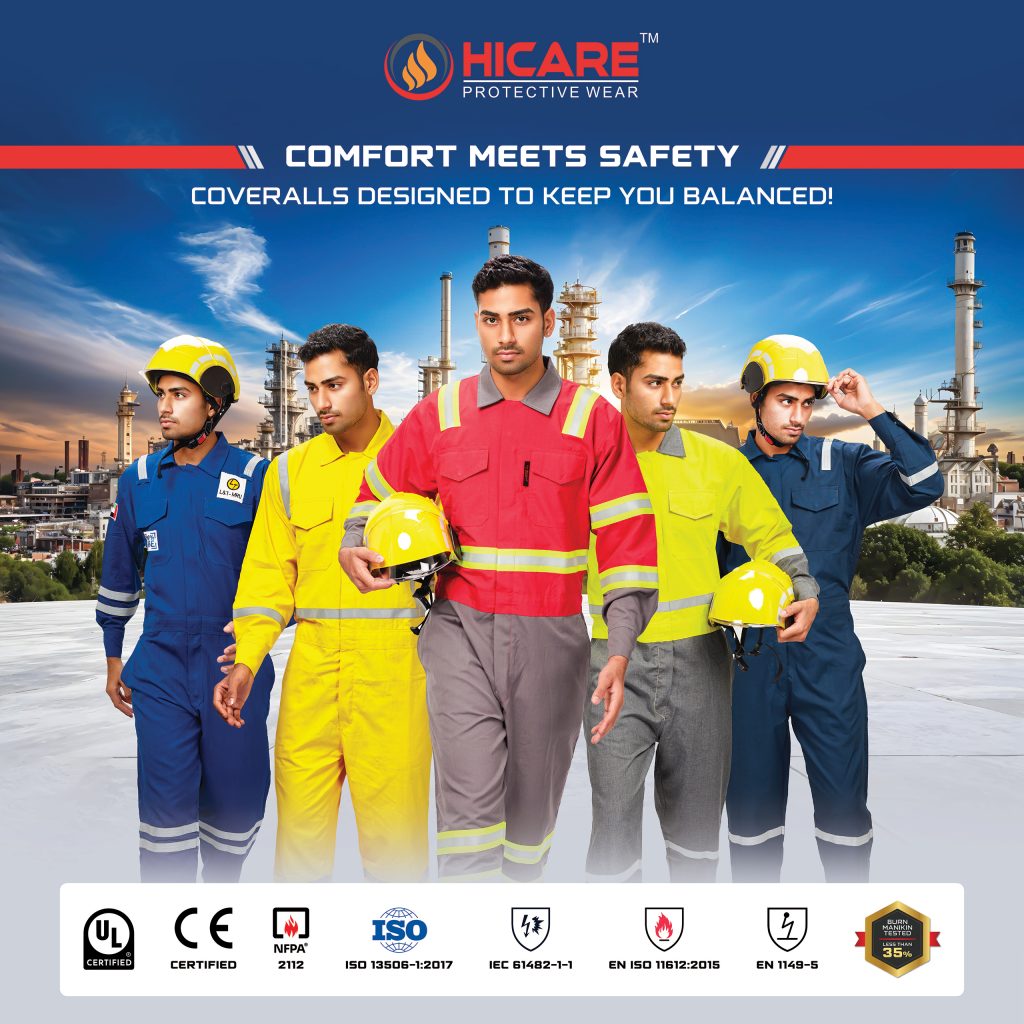
In industrial workplaces, safety has always been non-negotiable. But in recent years—especially moving into 2026—there has been a noticeable shift in how companies think about personal protective equipment. Workers today expect advanced protection that doesn’t compromise comfort, durability, or long-term performance. This is exactly why the IFR Coverall has become one of the most searched and widely adopted flame-resistant garments across Oil & Gas, Petrochemicals, Power, and Heavy Engineering sectors.
But what exactly makes an IFR Coverall different from a regular FR garment? Why are safety experts and HSE teams recommending it more than ever? And why are companies upgrading to HiCare IFR Coverall for permanent, reliable flame protection?
Let’s break it down in the simplest—and most practical—way possible.
What Exactly Is an IFR Coverall?
An IFR Coverall (Inherent Flame-Resistant Coverall) is a protective garment made from
fibers that are naturally flame-resistant. This means their protection is not added through chemicals—it is built into the DNA of the fabric.
If exposed to fire or heat, the fabric does not melt, does not drip, and automatically self-extinguishes. And the best part?
The flame resistance stays the same for the entire life of the garment.
This is the single biggest advantage over traditional chemically treated FR coveralls.
Why Workers Prefer IFR Instead of FR in 2026
Workers who operate near hot surfaces, flash-fire zones, electrical panels, or welding sparks need a fabric that doesn’t lose strength under pressure. With IFR fabric, the protection remains stable even after:
- Multiple wash cycles
- Exposure to sunlight
- Daily wear and tear
- Harsh working environments
And because IFR is lightweight, breathable, and softer than most treated FR fabrics, workers report higher comfort levels—important during long shifts, especially in hot climates like the Gulf or Indian industrial zones.
How Inherent FR Technology Works (Simple Explanation)
Every fiber in an IFR garment is engineered to resist ignition. The FR property is not a surface coating. It is built into the core of the fiber using:
- Modacrylic blends
- Aramid fibers
- Special chemical structures that do not burn
When heat hits the fabric, the fibers swell and thicken, creating a barrier between the heat source and the skin. This protective reaction happens instantly and naturally—without releasing harmful chemicals or melting.
This is why inherent FR clothing is preferred in industries where even a second of exposure can cause severe injuries.
Why 2026 Is Seeing the Biggest Shift Toward IFR Coveralls
Several global safety updates and HSE reforms are pushing companies to upgrade outdated PPE. Many refineries and petrochemical plants have already mandated inherent FR clothing because:
- It lasts longer
- It reduces PPE replacement cost
- It improves compliance for NFPA,
EN ISO, and international norms - It reduces worker complaints about heat or discomfort
- It provides consistent protection in flash-fire situations
Companies that previously used treated FR clothing are now transitioning to IFR as a
smarter long-term investment.
Where IFR Coveralls Are Used (Practical Real-World Applications)
The industries using IFR protection continue to grow every year. Some of the most common include :
Oil & Gas Drilling and Refinery Operations
Exposure to hydrocarbons, hot pipelines, and flash-fire makes IFR clothing a must.
Petrochemical & Chemical Processing
Where ignition risk exists 24/7.
Power Generation & Utilities
Workers near electrical panels combine IFR with arc-rated protection.
Welding & Fabrication
Protection from sparks and molten metal.
Manufacturing Plants
Especially in hot forging, furnace, and heat treatment operations.
In all these environments, HiCare IFR Coveralls help reduce burn injury risks significantly.
How to Maintain an IFR Coverall (Worker-Friendly Care Guide)
Even though inherent FR protection never fades, proper care extends garment life.
Wash: Use mild detergent; avoid chlorine bleach or harsh chemicals.
Dry: Tumble dry on low; avoid overheating.
Avoid: Fabric softeners, starch, or repairing with non-FR thread.
Inspect: Check for tears, broken zippers, or worn-out areas.
HiCare provides a complete maintenance guide with every garment supplied.
Why HiCare Is a Preferred Manufacturer for IFR Coveralls in India & Global Markets
HiCare’s strength lies in in-house manufacturing, strict quality checks, and real-world testing. With a decade of experience in professional technical garments, HiCare ensures :
- Consistent fabric quality
- International certification compliance
- Custom production capacity
- Faster delivery
- Better durability compared to market alternatives.
From refineries to power plants, HiCare’s IFR garments have become a trusted name in worker safety.
Final Takeaway: Comfort, Safety, and Compliance in One Jacket
Industrial safety is evolving—and so is the expectation of workers. The shift from treated FR to inherent flame-resistant protection is not just a trend but a necessity. With improved comfort, longer lifespan, and reliable flame resistance, IFR Coveralls are clearly the smarter choice for 2026 and beyond.